Inviting the Vampire In
Surveillance, Wearables, and the Last Place We Were Supposed to Be Left Alone

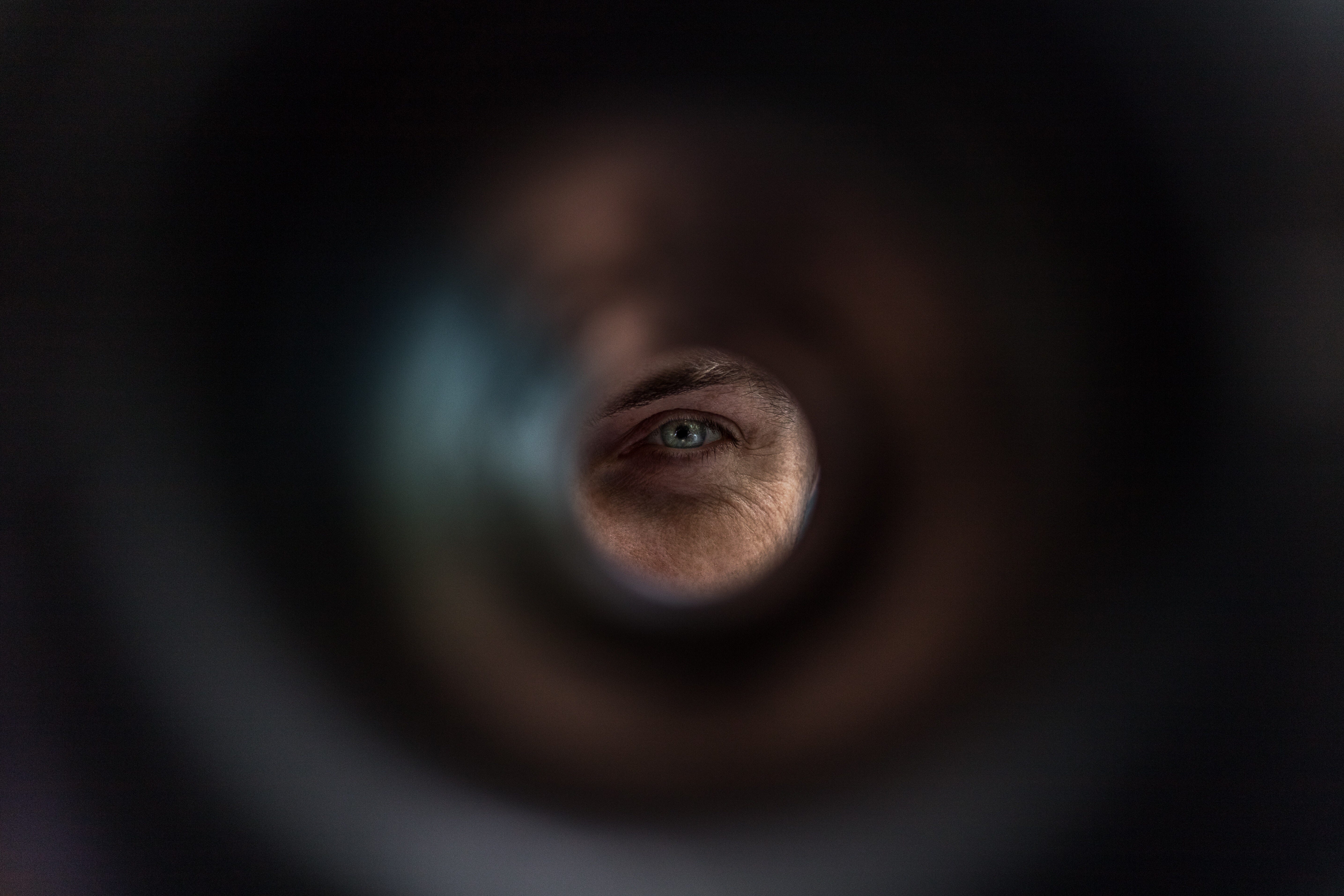
Let’s lay it all out.
I can guarantee I have done more work with glasses since 2013 than most of you.
That’s not a flex… or not meant to be at least.
I was building systems for Augmented Reality and poured $500K plus into part of our system for that… until I realized how dangerous it really can be.
Not just in blocking the real world… but in how it can feed big techs unsatiable appetite for data.
Especially your private life.
We’re not talking about surveillance as some abstract concept anymore.
This isn’t a theory exercise or a sci-fi debate.
We’re talking about a real, lived world where wearable cameras, glasses with built-in recording, and always-on devices are blurring the line between public and private in ways we have never seen before.
We need to stop pretending this is all the same thing.
There is a massive difference between fixed security cameras and wearable surveillance.
A MASSIVE one.
Fixed cameras in public spaces, or even on private property, have a defined purpose. They sit in known locations. They are visible. They can be subpoenaed. They exist inside a legal framework, even if that framework is imperfect. They help solve crimes. I know this personally. A close friend of mine was murdered on a sidewalk.
Better public footage would have helped. Faster identification would have helped.
I have zero issue saying that out loud.
That is not what I am worried about.
The danger is not a pole-mounted camera or a doorbell cam with a defined field of view. The danger is personal, always-on surveillance that moves with a human body and has no real oversight.
Glasses with cameras are not just “a new device.” They are a mobile surveillance system that can enter any space a human can enter. That includes spaces that were never meant to be recorded. Bathrooms. Change rooms. Locker rooms. Private offices. Bedrooms. Medical spaces. Anywhere.
And before anyone jumps in with “that’s illegal” or “people won’t do that,” stop. People already do worse with far less power.
The real threat is not just recording. It’s what happens after.
We are now in an era where anyone can take an image of you, scrape data from the internet, and generate fake versions of you doing things you never did. Deepfakes are not a future risk. They are a present reality. You don’t need Hollywood budgets anymore. You need a laptop, an internet connection, and a lack of ethics.
Now imagine how this plays out in the real world.
You walk into a room. Someone finds you attractive. They don’t talk to you. They don’t interact with you. They record you. Maybe once. Maybe ten times. Maybe over weeks. They scrape your face. They scrape your voice. They generate images or video of you without your consent, without your knowledge, without any ability for you to even know it happened.
That is not science fiction. That is a stalking toolkit.
And here’s the part people keep missing. This doesn’t even require big tech once the data exists. Centralization makes it worse, but decentralization at the individual level does not magically make this safe. A single person with a wearable camera and Ai tools can cause real harm. Reputation damage. Psychological damage. Blackmail. Harassment. Trauma.
Now stack that on top of what we already allowed.
We already let devices into our homes that listen to us.
We did it slowly. We did it under the banner of convenience. Play music. Set a timer. Control the lights. Order groceries. And in exchange, we accepted that microphones sit in our kitchens and living rooms, always waiting. Always listening. We were told it was fine. We were told it was anonymized. We were told it was just for “improving the experience.”
Meanwhile, deeply personal conversations get turned into ad profiles. Arguments. Grief. Health issues. Relationships. Financial stress. All quietly absorbed into systems designed to sell us shit.
That was already bad.
Now we are letting them watch us.
Not just in our homes, but everywhere. Wearables. Lanyards. Pins. Glasses. “Ambient” devices that claim to be helpful while turning lived human experience into training data.
The pitch is always the same.
It’s optional.
It’s harmless.
My personal favourite: It’s the future.
BULLSHIT.
This is the last vestige of privacy we had. The four walls we pay for. The spaces where we were supposed to be off camera. Off mic. Unobserved.
Here’s where my vampire analogy matters.
A vampire cannot enter your home unless you invite it in.
We invited microphones in because they were useful. We invited cameras in because they were “cool.” We invited central platforms in because they were free. We didn’t notice the cost until it was already paid.
Big tech thrives on this.
Centralize everything.
Aggregate everything.
Store everything.
Sell access.
When data is centralized, it becomes power.
When it becomes power, it gets abused.
Always. History does not offer exceptions.
THIS is where I draw the line clearly.
I am not anti-camera, anti-public safety, and I am sure AF not anti-technology.
I am anti-surveillance creep into spaces that were never meant to be surveilled.
Fixed cameras in public spaces with transparency and legal accountability are one thing. Wearable, always-on recording devices that can move through private and semi-private spaces are something else entirely. Pretending they are the same is either dishonest or dangerously naive.
Once the boundary between public and private collapses, you do not get it back.
Once normalized, this does not roll backward. It only gets quieter, smaller, and harder to notice.
This is not about paranoia. This is about pattern recognition. Look at the last twenty years alone. Look at how much we gave up without a real vote. Look at how often convenience was used to bypass consent.
We don’t need to wait for the worst version of this to exist before we say something.
By then it’s already too late.
“WE” let the vampire in.
The question now is whether we are honest enough to admit it, and strong enough to stop inviting its friends.
Well said, Wil.